

Understanding the Core Purpose of Sales Enablement
Sales enablement has evolved into a critical revenue function that directly influences how effectively sales teams engage buyers and close deals. At its core, it is about equipping revenue teams with the right knowledge, tools, content, and skills to engage modern buyers who are more informed and more selective than ever. A well-designed system ensures that every sales interaction is intentional, consistent, and aligned with business goals. Organizations that invest in structured enablement often see improvements in pipeline velocity and win rates because their teams are not relying on guesswork. Instead, they operate within a guided ecosystem that supports performance at every stage of the buyer journey.
Building a Results-Driven Sales Enablement Framework requires understanding that enablement is not a one-time training event but a continuous operational discipline. It connects strategy with execution, ensuring that sales teams are always aligned with shifting market expectations. Many organizations mistakenly treat enablement as only onboarding, but modern enablement spans content delivery, coaching, analytics, and technology integration. It also serves as a bridge between marketing and sales, ensuring messaging consistency across all customer touchpoints. Without this alignment, even skilled sales teams struggle to convert opportunities into revenue.
A strong enablement function also helps reduce friction in the sales process by removing uncertainty around messaging, objection handling, and buyer engagement strategies. This clarity empowers sales representatives to focus on relationship-building rather than searching for information. Ultimately, enablement is about driving predictable revenue outcomes through structured support systems.
Key Components of a High-Performing Sales Enablement System
A successful enablement system is built on interconnected components that work together to improve sales effectiveness. These components must be designed intentionally to support both strategic goals and day-to-day execution. Organizations that overlook even one component often experience gaps in performance consistency.
Building a Results-Driven Sales Enablement Framework depends on integrating these essential elements:
-
Strategic alignment between sales, marketing, and revenue operations
-
A structured content enablement system that supports buyer engagement
-
Continuous learning and development programs for sales teams
-
A well-integrated technology stack that supports workflows
-
Data-driven performance measurement and optimization
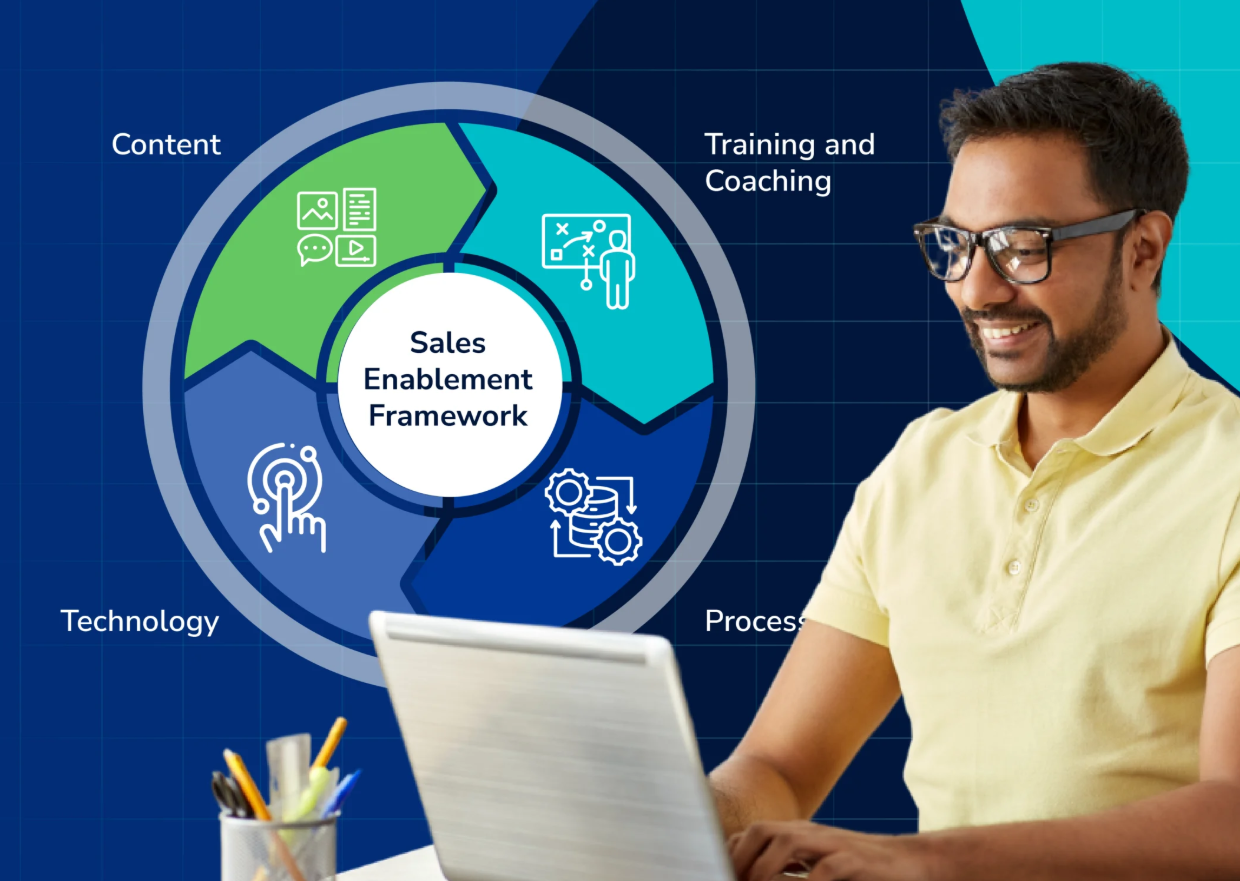
Strategic alignment ensures that all teams are working toward shared revenue objectives rather than isolated departmental goals. Content enablement ensures that sales teams always have access to relevant, up-to-date materials that support conversations at every stage of the funnel. Training and development ensure that skills evolve alongside market demands. Technology provides scalability and efficiency, while analytics ensures accountability and continuous improvement.
Each component reinforces the others, creating a system that is both adaptive and performance-driven. Without this integration, enablement efforts become fragmented and less effective.
Designing the Sales Enablement Framework Architecture
Designing a scalable architecture is one of the most important steps in enablement success. A strong framework is built with clarity around roles, workflows, and responsibilities across the organization. It should reflect how buyers actually move through their decision-making journey rather than internal organizational structures. This ensures that enablement resources are deployed where they create the most impact.
Building a Results-Driven Sales Enablement Framework requires mapping the entire revenue ecosystem and identifying how each function contributes to sales performance. This includes defining how content is created, approved, distributed, and measured. It also involves establishing clear ownership of enablement initiatives, often led by a dedicated enablement or revenue operations team.
A well-designed architecture should also support scalability. As organizations grow, their sales complexity increases, requiring more structured coordination across teams and regions. Without a scalable foundation, enablement systems become inconsistent and difficult to manage. The architecture must also allow flexibility so teams can adapt quickly to market changes without rebuilding processes from scratch.
Strong frameworks ensure that every sales interaction is supported by a structured system rather than individual improvisation. This consistency is what drives predictable revenue outcomes.
Aligning Sales Enablement With Buyer Behavior
Modern buyers are more autonomous, research-driven, and selective than in previous sales environments. They expect personalized interactions and immediate value from sales engagements. This shift requires enablement strategies that are tightly aligned with buyer behavior and decision-making patterns.
Building a Results-Driven Sales Enablement Framework means understanding that buyers no longer follow linear sales paths. Instead, they move fluidly between awareness, consideration, and decision stages. Sales teams must be prepared to engage at any point in this journey with relevant insights and solutions.
Organizations that align enablement with buyer behavior often focus on improving contextual engagement. This includes tailoring messaging based on industry, role, and pain points. It also involves anticipating objections before they arise and equipping sales teams with proactive responses.
Key alignment strategies include:
-
Mapping buyer personas with detailed behavioral insights
-
Creating stage-specific messaging frameworks
-
Developing objection handling libraries based on real interactions
-
Personalizing engagement strategies across channels
-
Ensuring consistency across digital and human touchpoints
When enablement aligns with buyer expectations, sales conversations become more meaningful and conversion-focused. This alignment reduces friction and builds trust more effectively.
Content Strategy for a Results-Driven Sales Enablement Framework
Content plays a central role in enabling sales teams to communicate value effectively. Without structured content, even skilled sales representatives struggle to maintain consistency in messaging. A strong content strategy ensures that every asset supports a specific stage of the buyer journey.
Building a Results-Driven Sales Enablement Framework requires a disciplined approach to content creation and governance. Content must be easy to access, regularly updated, and tailored for different buyer personas. It should also be designed to support both digital engagement and live conversations.
Effective content strategies typically include:
-
Sales pitch decks tailored to specific industries
-
Competitive positioning guides
-
Objection handling playbooks
-
Product demonstration materials
-
Case-based narrative assets (without relying on static storytelling formats)
Content must be continuously evaluated for effectiveness. This involves tracking usage rates, engagement levels, and conversion impact. Outdated or irrelevant content can negatively affect sales performance, making governance critical. Marketing and sales must collaborate closely to ensure content remains aligned with market needs.
Strong content systems ultimately empower sales teams to deliver more persuasive and consistent messaging.
Sales Training and Skill Development Strategy
Training is a foundational element of any enablement framework. However, modern sales training goes beyond traditional onboarding sessions. It requires continuous learning systems that evolve with market conditions and buyer expectations.
Building a Results-Driven Sales Enablement Framework involves designing training programs that are adaptive, role-specific, and performance-oriented. Sales representatives must continuously refine their skills to remain competitive in dynamic environments.
Effective training programs include structured learning paths for different roles such as SDRs, account executives, and customer success teams. These programs often combine digital learning modules with live coaching sessions. Role-playing exercises and scenario-based simulations help reinforce real-world application.
Key training focus areas include:
-
Consultative selling techniques
-
Product and solution mastery
-
Negotiation and objection handling
-
Data-driven decision-making
-
Customer engagement strategies
Sales managers play a critical role in reinforcing training through ongoing coaching and feedback loops. Without reinforcement, training loses effectiveness over time.
Technology and Automation in Sales Enablement
Technology is a force multiplier in modern enablement systems. It allows organizations to scale processes, automate repetitive tasks, and gain deeper insights into sales performance. Without the right technology stack, enablement efforts often remain manual and inconsistent.
Building a Results-Driven Sales Enablement Framework requires integrating tools that support CRM management, sales engagement, content distribution, and analytics. These systems must work together seamlessly to avoid fragmentation.
Key technology components include:
-
CRM systems for pipeline and relationship management
-
Sales engagement platforms for automated outreach
-
Content management systems for centralized resources
-
Analytics dashboards for performance tracking
-
AI tools for predictive insights and coaching recommendations
Automation reduces administrative burden and allows sales teams to focus on high-value activities. It also ensures consistency in execution across large teams. AI-driven insights further enhance decision-making by identifying patterns in buyer behavior and sales performance.
Technology should always support strategy rather than define it.
Measuring the Effectiveness of Sales Enablement Efforts
Measurement is essential for understanding whether enablement initiatives are delivering value. Without clear metrics, organizations cannot optimize performance effectively.
Building a Results-Driven Sales Enablement Framework involves defining KPIs that directly connect enablement activities to revenue outcomes. These metrics should focus on both efficiency and effectiveness.
Common performance indicators include:
-
Win rates across different segments
-
Sales cycle length reduction
-
Revenue per sales representative
-
Content engagement and usage rates
-
Training completion and retention impact
Analytics help organizations identify gaps in performance and adjust strategies accordingly. Data-driven insights also enable more accurate forecasting and planning.
Effective measurement systems ensure accountability across all enablement functions.
Challenges in Building a Sales Enablement Framework
Despite its importance, implementing enablement systems is not without challenges. Many organizations struggle with alignment, adoption, and measurement complexities.
Building a Results-Driven Sales Enablement Framework often requires overcoming resistance to change. Sales teams may be hesitant to adopt new processes or technologies. Content fragmentation and inconsistent messaging can also hinder effectiveness.
Common challenges include:
-
Lack of alignment between sales and marketing teams
-
Poor adoption of enablement tools
-
Inconsistent content usage
-
Difficulty measuring direct ROI
-
Fragmented data across systems
Addressing these challenges requires strong leadership, clear communication, and continuous reinforcement of enablement value.
Best Practices for Sustaining a High-Impact Enablement System
Sustaining enablement success requires ongoing commitment and refinement. Organizations must continuously evolve their strategies to remain competitive.
Building a Results-Driven Sales Enablement Framework depends on maintaining consistency while adapting to change. Regular audits of content, training, and tools ensure ongoing relevance. Leadership involvement is also critical in reinforcing the importance of enablement across teams.
Best practices include:
-
Establishing continuous feedback loops
-
Conducting regular performance reviews
-
Updating content based on market changes
-
Encouraging cross-functional collaboration
-
Reinforcing enablement culture at all levels
Sustainable enablement systems are those that evolve with both internal and external changes.
Scaling Sales Enablement Across Growing Organizations
As organizations expand, enablement systems must scale without losing consistency. Growth introduces complexity across regions, teams, and product lines.
Building a Results-Driven Sales Enablement Framework at scale requires balancing standardization with flexibility. Global organizations often need localized content while maintaining consistent messaging frameworks.
Scalability considerations include:
-
Standardized onboarding programs
-
Regional customization of sales materials
-
Centralized content governance systems
-
Distributed training models
-
Unified technology ecosystems
Scalable enablement ensures that performance remains consistent regardless of organizational size.
Future Trends in Sales Enablement
The future of enablement is being shaped by advancements in artificial intelligence, automation, and data analytics. These technologies are transforming how sales teams learn, engage, and perform.
Building a Results-Driven Sales Enablement Framework in the future will involve more predictive and personalized systems. AI will play a larger role in coaching, content recommendations, and buyer engagement strategies.
Emerging trends include:
-
AI-powered sales coaching systems
-
Predictive buyer behavior modeling
-
Immersive virtual training environments
-
Fully automated workflow orchestration
-
Hyper-personalized sales engagement models
Organizations that adapt early to these trends will gain a competitive advantage in revenue performance.
Frequently Asked Questions
What is a sales enablement framework?
It is a structured system designed to improve sales performance through training, content, tools, and data-driven strategies.
Why is sales enablement important for revenue growth?
It improves consistency, reduces inefficiencies, and enhances the ability of sales teams to close deals effectively.
What are the main components of sales enablement?
Content systems, training programs, technology tools, performance analytics, and cross-functional alignment.
How does sales enablement improve sales performance?
It equips teams with the right resources, reduces friction in the sales process, and improves buyer engagement quality.
What tools support sales enablement?
CRM platforms, sales engagement tools, analytics dashboards, and content management systems.
How is success measured in sales enablement?
Through metrics such as win rates, sales cycle duration, revenue per rep, and content engagement.
Takeaway
Building a Results-Driven Sales Enablement Framework is not a one-time initiative but a structured, evolving system that connects strategy, execution, and performance measurement. When properly designed, it aligns sales teams with buyer behavior, strengthens messaging consistency, and improves revenue predictability. Organizations that invest in integrated enablement systems position themselves to scale more effectively and compete in increasingly complex markets.
Read More: https://salesgrowth.com/sales-enablement-framework/